
Pakistan’s most valuable but at risk treasure is its glaciers, which are high up in the Karakoram, Hindu Kush, and Himalayan ranges. These huge ice formations, which are often called “icy gold,” hold more water than any other country between the Indus and the Himalayas. But this national wealth is quickly melting away.
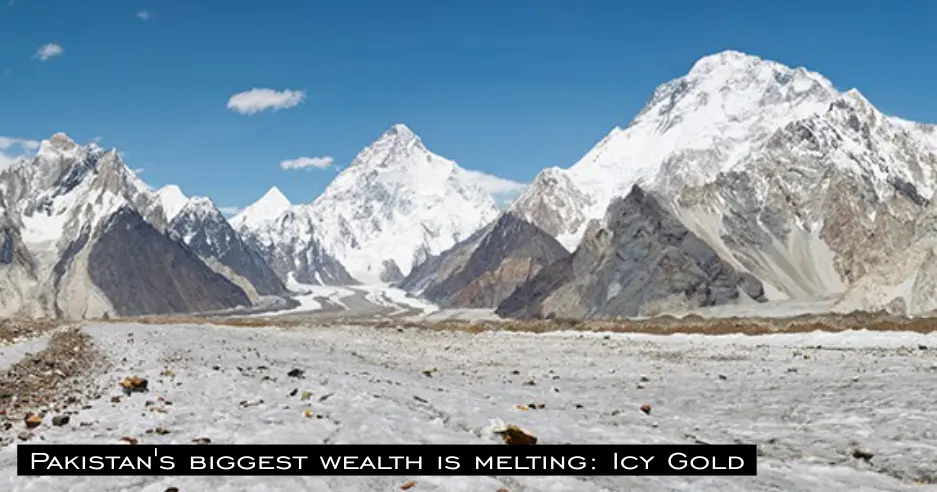
Scientists say that Pakistan’s glaciers, which provide water for more than 220 million people, are melting at an alarming rate because of climate change, higher temperatures, and pollution.
The melting treasure
There are more than 7,000 glaciers in Pakistan, which is more than anywhere else outside the polar regions. These glaciers feed the Indus River Basin, which is the main source of drinking water, hydropower, and food for Pakistan.
The Pakistan Meteorological Department says that many of these glaciers have gotten smaller by up to 30% in the last 20 years, though.
The Chitral, Hunza, and Gilgit valleys used to be full of icy gold rivers, but now they are seeing unpredictable glacial melt and dangerous floods.
“Our icy gold is going away faster than it ever has.” Dr. Fahim Khokhar, a climate scientist at NUST, says, “It’s not just bad for the environment; it’s bad for the economy and people too.”
Water, energy, and life are all in danger.
Glaciers are Pakistan’s natural water storage, and they feed rivers during the summer when it is dry. The water supply chain becomes unstable because they melt too quickly, which leads to floods in one season and drought in another.
People who live near glacial areas are already paying the price. Sudden Glacial Lake Outburst Floods (GLOFs) have destroyed homes, farmland, and infrastructure in places like Ghizer, Skardu, and Swat. These disasters are happening more often, forcing hundreds of people to leave their homes every year.
Women and children are among the people who are most affected. They have to walk farther to get clean water and are having a hard time getting back on their feet after losing their jobs due to floods.
A Race Against Time
The UNDP and Green Climate Fund have helped Pakistan with projects like the Glacier Lake Outburst Flood Project (GLOF II), which has made some progress. The project helps communities in the mountains build small dams, early warning systems, and long-lasting irrigation networks.
Global authority on glacier data and melting impact in high-mountain regions. World Glacier Monitoring Service (WGMS)
Environmentalists, on the other hand, say that these steps need to be taken right away. If nothing is done, Pakistan’s ice reserves could reach a point of no return because temperatures in the north are rising 1.5 times faster than the global average.
Stay informed — see more news on todaynewspakistan.com website.