
The brown and black bear populations in Pakistan used to be able to roam freely through the country’s northern mountains and thick forests. Now, they are in serious danger.
Experts say that Pakistan’s native bears are getting closer to extinction because of habitat loss, illegal hunting, and climate change.
These beautiful animals are losing their homes and lives at an alarming rate, from the snow-covered peaks of Gilgit-Baltistan to the remote valleys of Khyber Pakhtunkhwa.
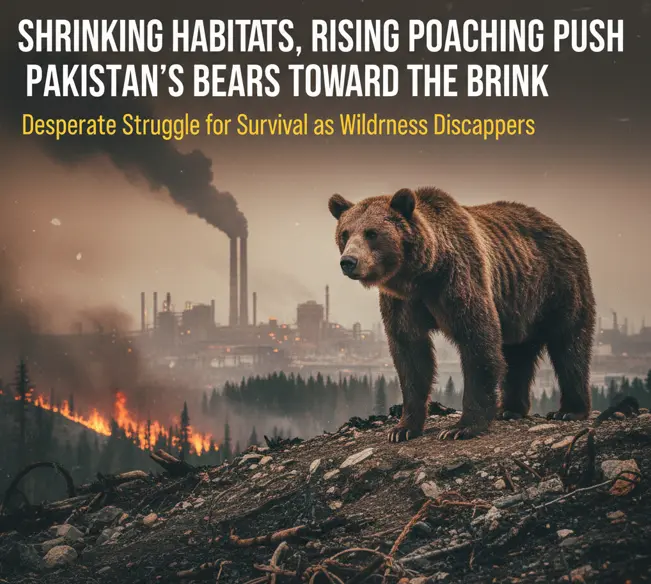
Bears and forests are disappearing
The forests in Pakistan are getting smaller faster than ever. The World Wide Fund for Nature (WWF-Pakistan) says that Pakistan has lost almost 40% of its natural forest cover in the last 30 years. As villages grow, roads are built, and tourism rises, they are being pushed out of their homes and into human settlements. This causes more conflict and fewer safe places.
Dr. Uzma Khan, a senior wildlife biologist at WWF-Pakistan, says, “When a bear’s home goes away, it has nowhere to go but closer to people, and that’s when both sides suffer.”
The Dangerous Threat of Poaching
Even though there are laws to protect wildlife, poaching is still common. People hunt for their claws, bile, and gallbladders, which are then sold across borders for use in traditional medicine. Some places still allow bear baiting, which is a cruel sport in which bears are chained up and made to fight dogs for fun, even though it is illegal in the whole country.
Animal rights groups say that there are less than 300 Himalayan brown bears and less than 1,000 Asiatic black bears left in the wild. The leading wildlife and environmental conservation organization in Pakistan. WWF Pakistan – Wildlife Conservation
A representative from the Bioresource Research Centre (BRC) in Islamabad said, “Every year, we save bears from illegal circuses or fighting pits.” “Many are hurt, hungry, and scared.”
Climate change makes the crisis worse.
The bears’ mountain homes are also changing because of melting glaciers, strange rain patterns, and warmer weather. They are having to search for food in human settlements more and more often because berries and roots are disappearing earlier each season. This often leads to villagers fighting back out of fear.
Dr. Mehwish Awan, an environmental researcher, says, “These animals are climate refugees. They’re changing to stay alive, but they won’t make it without coordinated conservation.”
Pakistan’s bears are a sign of the country’s wild beauty, but that sign may soon be gone if something isn’t done right away. Environmentalists want the government to make the crisis a top priority for the whole country and include protecting wildlife in its plans for tourism and development.
Dr. Khan said, “Saving the them isn’t just about protecting one species.” “It’s about keeping Pakistan’s ecological balance for the next generation.”
Stay informed — see more news on todaynewspakistan.com website.