
There are powerful natural forces that are always moving, shifting, and reshaping the Earth under our feet. Earthquakes and volcanoes are two of the most dramatic geological events that have shaped the surface of our planet for millions of years. The Himalayas are very tall, and the Pacific Ring of Fire has volcanoes that erupt all the time. These things remind us that the Earth’s crust is always moving.
The Science Behind the Changes
The lithosphere is the outer layer of the Earth. It is made up of huge pieces called tectonic plates. Underneath the surface, these plates float on a softer layer of molten rock. When they hit each other, pull apart, or slide past each other, a lot of pressure builds up. This can cause an earthquake or push molten rock to the surface through a volcano.
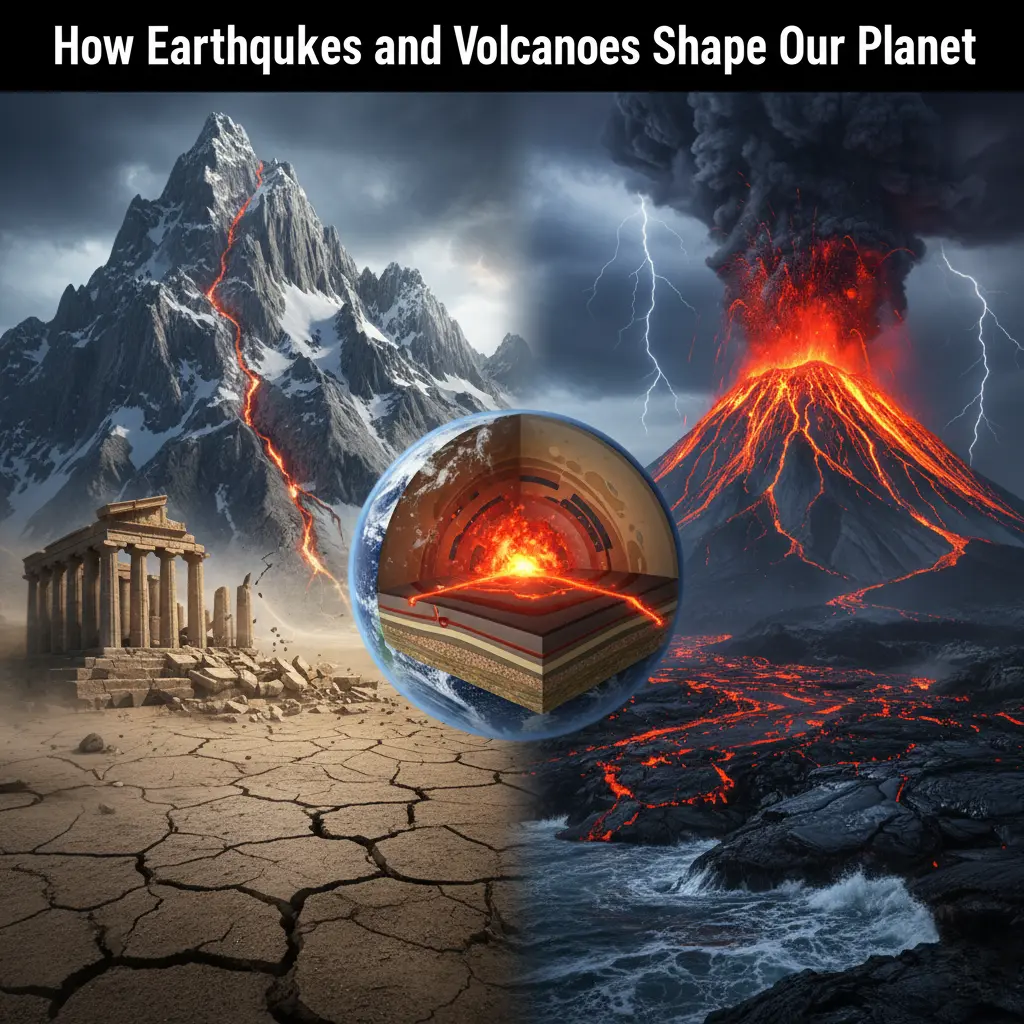
This slow but unstoppable movement, which happens only a few centimeters a year, shapes continents, makes ocean trenches, and even changes the climate around the world over time.
Volcanoes: Nature’s Safety Valves
Volcanoes let Earth’s internal heat escape, like safety vents. When pressure builds up deep underground, magma pushes its way up through cracks, erupting as lava, ash, and gases. Over time, repeated eruptions form vol canic islands and mountain ranges, like Japan’s peaks and Indonesia’s archipelago.
Eruptions can be bad, but they also add minerals to the soil, which makes areas around volcanoes very good for farming.
Earthquakes: The planet’s sudden shakes
Earthquakes and Volcanoes, Earthquakes happen without warning, unlike volcanoes. The crust suddenly breaks when tectonic stress gets too high for rocks to hold. This sends seismic waves through the ground, shaking it. These tremors can be anything from small shakes to huge earthquakes that can destroy cities.
Seismographs are tools that modern seismologists use to find and record earthquakes. Scientists look at fault lines, like California’s San Andreas Fault or Turkey’s Anatolian Fault, to figure out where the most dangerous areas are and how to make safety plans better.
Pakistan’s Seismic Reality
Pakistan is one of the most seismically active places on Earth because it is at the crossroads of the Indian and Eurasian tectonic plates. Not only did these plates crash into each other to make the Himalayas, but they also cause earthquakes to happen all the time in northern and western Pakistan.
Deep fault lines under the Earth’s surface cause tremors to happen all the time in places like Balochistan, Gilgit-Baltistan, and Khyber Pakhtunkhwa. The terrible Kashmir earthquake of 2005 and the Quetta quake of 1935 are still sad reminders of how weak we are.
Pakistan regularly holds disaster-preparedness drills, earthquake awareness programs, and training for urban resilience to lower the chances of future disasters. The National Disaster Management Authority (NDMA) works with schools, hospitals, and rescue teams to make safety systems and emergency response systems stronger.
Raising Awareness and Strength
We can’t stop earthquakes and volcanoes from happening, but we can get ready for them. Strong infrastructure, education, and early warning systems can save a lot of lives and property. Pakistan’s spending on earthquake research and community training shows that more people are realizing that being ready can save lives.
A Planet That Lives and Breathes
Earth is still a dynamic and changing planet, from its molten core to its shifting crust. The same tectonic forces that destroy things also make beautiful things, like mountain ranges, fertile plains, and new landforms.
When we learn about how earthquakes and volcanoes change the world, we not only learn to respect nature more, but we also learn how to adapt, prepare, and live with the planet’s powerful rhythms.
📢 Stay informed — see more news on todaynewspakistan.com website.