Global trade and economics are what hold the modern world together. They connect countries, encourage new ideas, and shape political alliances. There is a complicated system of international trade that includes everything from the products on a shelf to the smartphones in your hand to the barrels of oil on a ship.
This web isn’t just about trade for Pakistan; it’s also about economic opportunity, strategic geography, and global power.
How Trade Works Around the World
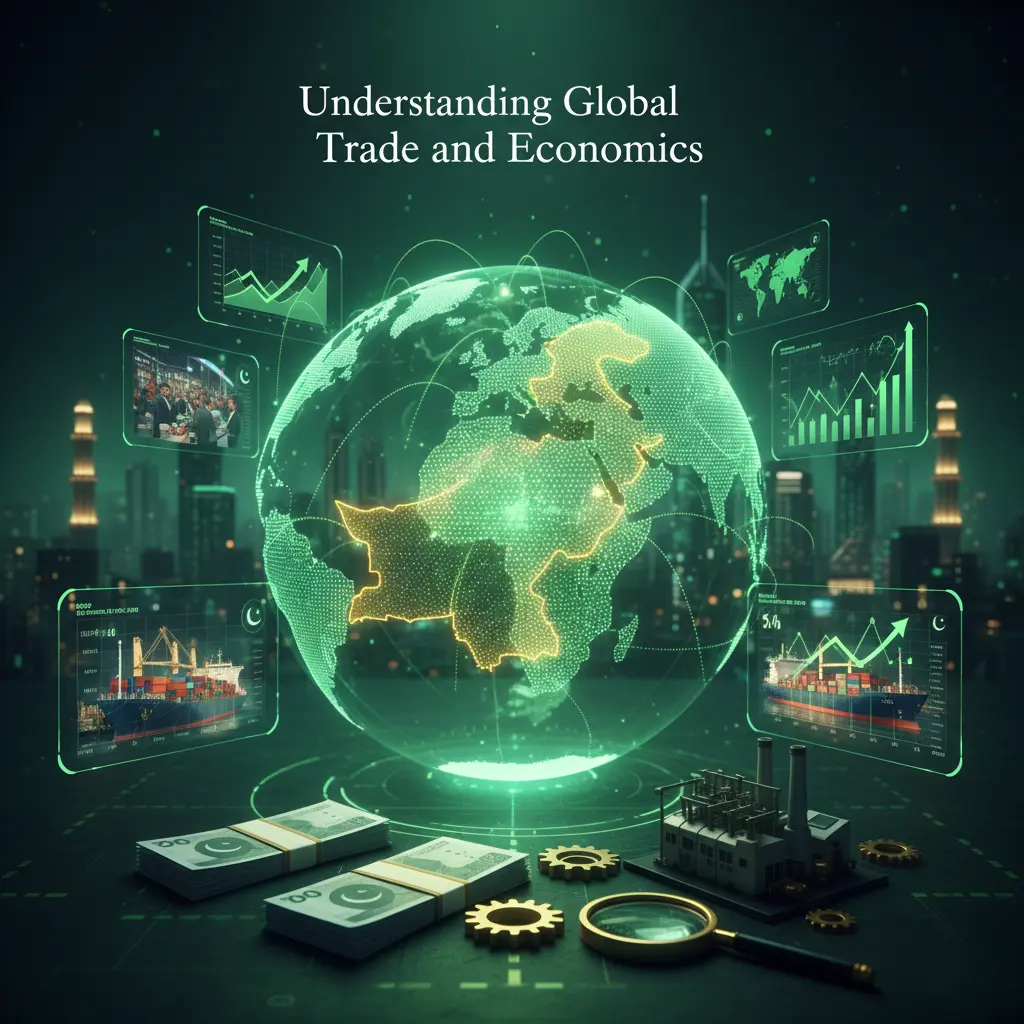
Exports and imports are the two main ideas that make up global trade and economics. Countries make things or provide services where they have a comparative advantage, like lower costs or better quality, and then trade them for things they don’t have.
This system makes people depend on each other, which means that working together is necessary for growth and stability. For instance, China sends electronics to other countries, Saudi Arabia sends oil, and Pakistan sends textiles and food.
When trade goes well, it leads to new jobs, more foreign exchange reserves, and new ideas. But when things go wrong, like wars, sanctions, or inflation, it can bring the world’s economies to their knees.
Pakistan’s Place in global trade and economics
Pakistan isn’t a trade giant yet, but its location makes it one of the most important transit and logistics hubs in Asia. Pakistan is a bridge between Central Asia, the Middle East, and East Asia because it shares borders with China, India, Iran, and Afghanistan and has direct access to the Arabian Sea.
The China-Pakistan Economic Corridor (CPEC), which is part of the global Belt and Road Initiative (BRI), shows how Pakistan is changing trade routes. Pakistan is making itself a key player in regional connectivity by building things like Gwadar Port, highways, and rail networks.
Dr. Ahsan Iqbal, a former Planning Minister, says, “Gwadar isn’t just a port. It’s Pakistan’s ticket to trade by sea around the world.”
The Belt and Road Initiative (BRI)
The Belt and Road Initiative in China is the biggest infrastructure project ever. It connects more than 70 countries through trade routes, ports, and railroads. Pakistan’s CPEC is one of its most important programs. It’s worth more than $60 billion and aims to make Pakistan an economic gateway to Asia and beyond.
The world economy in action
Trade doesn’t just move things; it also moves money, ideas, and power. Countries that export a lot of goods build up foreign reserves, while countries that import a lot of goods have trade deficits. Authoritative source for international trade data, agreements, and policy developments. World Trade Organization (WTO)
Pakistan’s goal is to increase industrial output while keeping exports and imports in balance. The government’s recent push for IT exports, agro-processing, and investments in renewable energy shows how countries change to keep up with global economic trends.
Why It’s Important to Know About Trade
Changes in the world affect even small businesses in the same area. When oil prices go up in the Middle East or shipping costs go up in China, the effects are felt in Pakistan’s markets, factories, and homes. People and policymakers can make better decisions about things like currency exchange and national development strategies when they know about global trade and economics.
global trade and economics between countries is what keeps the world economy going, and Pakistan is at a very important point in that trade. The country could become an important trading center for Asia if it uses projects like CPEC and boosts exports.
📢 Stay informed — see more news on todaynewspakistan.com website.