
The Pakistan Central Bank has said that any more cuts to interest rates will depend on what the IMF review finds. The announcement shows how careful the institution is about balancing economic growth, keeping prices stable, and keeping the currency stable in 2025.
The Pakistan Central Bank recently lowered interest rates slightly to help the economy after a long period of tightening. However, policymakers stressed that the IMF’s evaluation of Pakistan’s economic reforms and fiscal performance will still be important when making decisions in the future.
Background: The Economic Situation in Pakistan
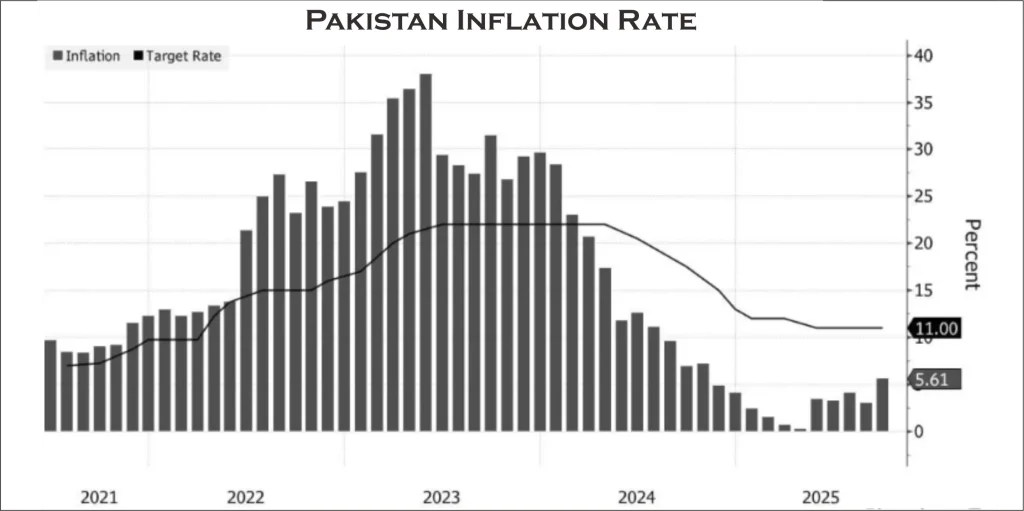
The State Bank of Pakistan, which is the country’s central bank, raised the benchmark interest rate to an all-time high of 22% over the past two years because of high inflation and pressure on the currency. This policy helped prices stay stable and gave investors back their trust, but it also slowed down industrial growth and made it more expensive for businesses to borrow money.
The central bank took its first step toward easing monetary policy earlier this quarter, when inflation started to go down and the rupee started to recover. However, officials say that more cuts won’t happen until the IMF gives its approval that Pakistan’s macroeconomic situation is still stable.
Official Statement from the Pakistan Central Bank
A spokesperson from the Pakistan Central Bank stated:
“Our monetary policy will remain data-driven and consistent with the IMF’s evaluation. Sustaining economic and price stability is our top priority.”
The statement highlighted that premature or aggressive rate cuts could undermine recent economic gains and create new inflationary pressures.
What to expect in 2025
If inflation keeps going down and Pakistan meets its IMF performance targets, the Pakistan Central Bank may start to lower interest rates slowly in the second half of 2025.
Experts do agree, though, that the central bank will keep a careful approach to protecting the rupee and keeping people’s trust in the market.