
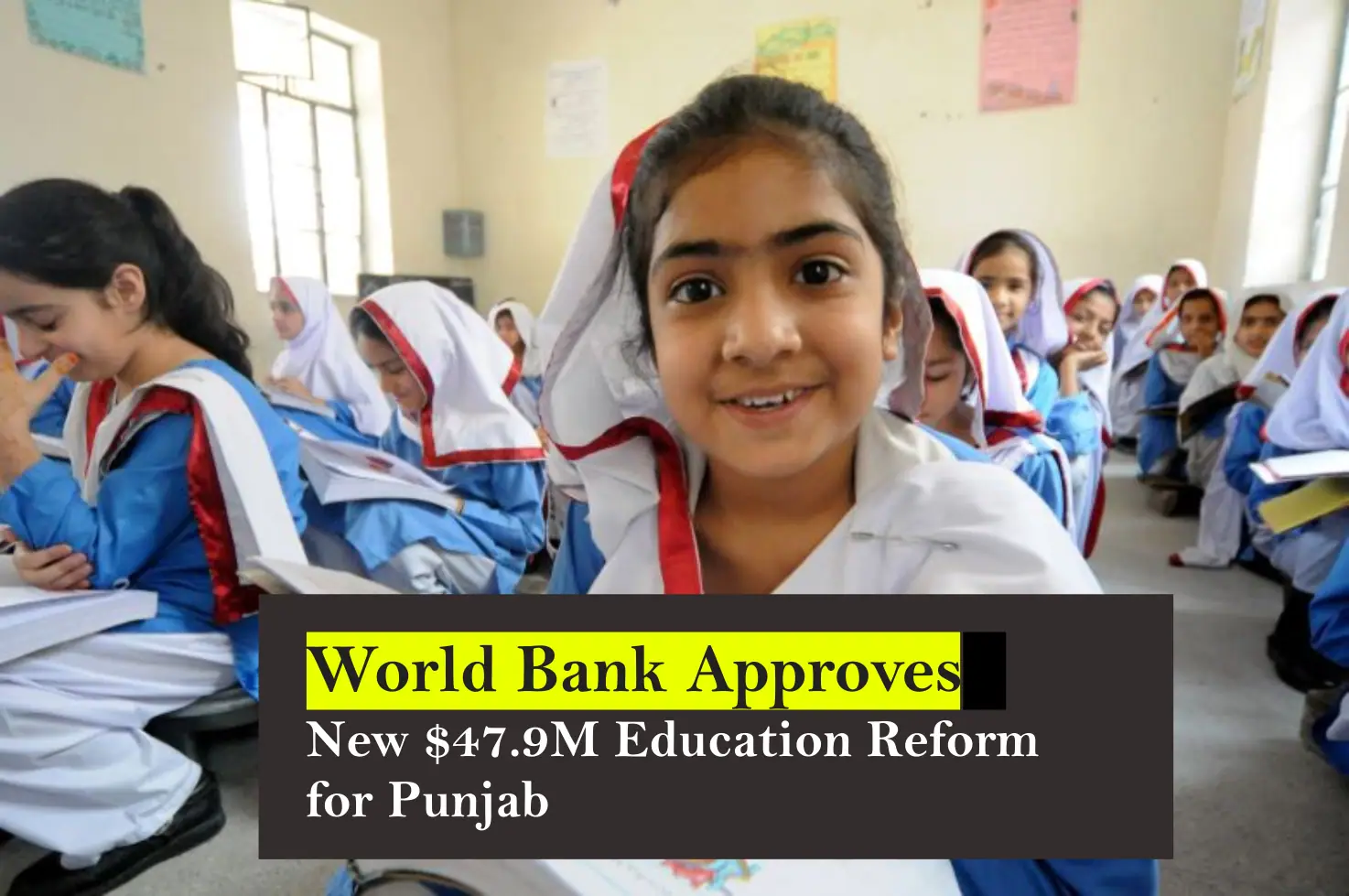
The World Bank has given the green light to a $47.9 million education reform project in Punjab province, which will greatly improve Pakistan’s education reform system. The goal of this program is to get millions of kids who aren’t in school back into school, make teacher training better, and make classrooms more up-to-date for the digital age.
The program, called “Punjab Human Capital Investment Project—Education reform Strengthening Phase,” will affect more than 4 million kids. It is one of the biggest investments in education reform in the country in a long time.
The Role of Technology in Schools
The introduction of smart learning systems is a big part of this reform. This will make sure that classrooms in both rural and urban areas have the technology they need.
Pilot schools in Lahore, Multan, and Faisalabad are getting interactive e-learning modules, solar-powered smart boards, and tablet-based assessment tools.
This step fits with Pakistan’s bigger Digital Education Vision 2025, which focuses on STEM learning, online testing, and making sure that boys and girls have the same opportunities in school.
Statements from the World Bank and the government
Nagy Benhassine, the World Bank’s Country Director for Pakistan, said,
“Education isn’t just about access; it’s also about fairness, quality, and resilience. This project helps Pakistan’s long-term goal of building human capital and making sure that every child, especially those in rural areas, has access to good learning opportunities.”
The Minister of Education for Punjab also said again that the project will help close the learning gaps that have opened up since COVID and improve Pakistan’s global education index ranking by 2026.
The Challenge Ahead
Pakistan still has a long way to go:
Climate change is still getting in the way of education. The floods in 2022 and 2025 damaged hundreds of schools. Experts say that Punjab’s plan is a step in the right direction, but that there needs to be consistency across the country and coordination between provinces.
Support and Vision from Around the World for this Education Reform
The World Bank, UNICEF, and USAID are all working together to create long-term plans for training teachers, keeping track of data, and making new curricula.
If done well, Punjab’s model could be used as a model for changing education in other provinces, from Sindh to Khyber Pakhtunkhwa.