
In 2025, the Karachi beach cleanup movement has gained unprecedented traction, bringing together volunteers, residents, and environmental organizations to clean up the city’s contaminated coastline. Thousands of locals have joined weekend drives from Clifton to Sandspit, turning unkempt beaches into lively gathering places and markers of civic pride.
The Growth of Beach Cleanup Projects in Karachi
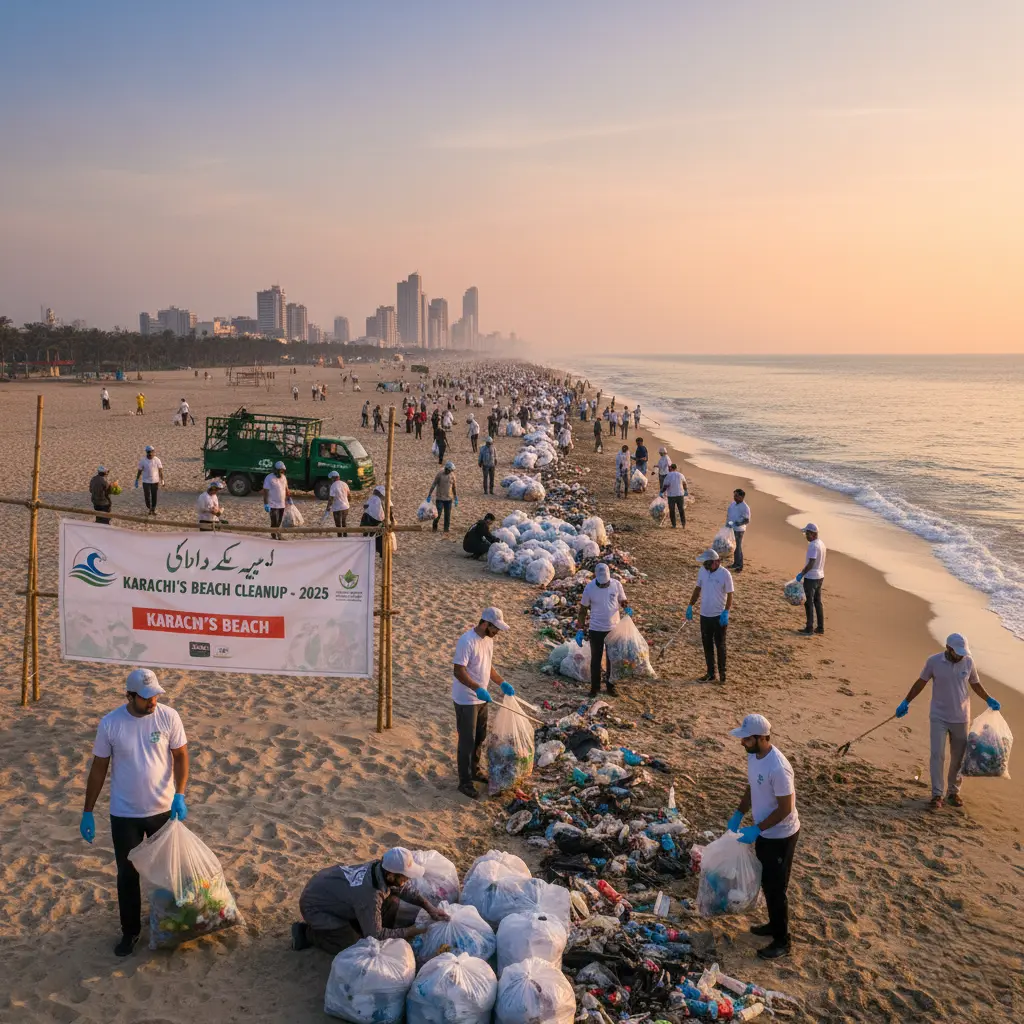
After tons of plastic were washed up on the beaches by monsoon tides in late 2024, youth-led organizations started organizing frequent cleanup drives, which brought attention to the Karachi beach cleanup efforts. By the middle of 2025, these neighborhood initiatives had grown into citywide campaigns backed by businesses, government agencies, and educational institutions.
Nearly 40% of Karachi’s daily production of over 12,000 tonnes of solid waste ends up close to beaches and waterways, according to environmental data from The Express Tribune. In addition to removing obvious trash, the cleanup campaigns seek to increase public awareness of recycling, waste segregation, and the need to use fewer single-use plastics.
Participation of the Community and Assistance from NGOs
Youth activism has been one of the main forces behind the 2025 beach cleanup campaign in Karachi. The initiative has been taken over by student organizations, environmental clubs, and corporate volunteers, who frequently collaborate with non-governmental organizations like Let’s Clean Karachi, HANDS Pakistan, and WWF-Pakistan.
Volunteers wearing gloves, biodegradable bags, and protective gear usually start weekend cleanup events at sunrise. According to a number of participants, the initiative has evolved from an environmental act to a social movement that unites communities and promotes civic duty.
“The Karachi beach cleanup has become a defining effort for environmental awareness in Pakistan,” said Sana Shahid, a spokesperson for WWF-Pakistan, in a recent interview. Every bag of garbage that is gathered symbolizes a shift in community behavior.
For environmental insights and coastal weather reports, visit the Pakistan Meteorological Department.
Government Reaction and Support for Policies
By supplying recycling bins at strategic locations, garbage trucks, and logistical assistance, the Karachi Metropolitan Corporation (KMC) and Sindh Environmental Protection Agency (SEPA) have provided institutional support. Permanent waste-management facilities close to popular beaches are part of the government’s Green Karachi 2030 plan to guarantee that volunteer progress is long-lasting.
Lawmakers have also promised to enforce the ban on dumping and littering close to the coast more strictly. SEPA has started educational initiatives in schools to teach students about waste reduction and marine conservation in partnership with non-governmental organizations.
Economic and Environmental Effects
Notable environmental improvements have already resulted from the ongoing beach cleanup efforts in Karachi. Mangrove nurseries along the coast have started to naturally regenerate, and sea turtle nesting areas near Sandspit have reported less plastic interference.
In terms of the economy, cleaner beaches have brought back small businesses and tourists, particularly in places like French Beach and Hawksbay. Visitors have increased by 20% since the beginning of 2025, according to local vendors and café owners, demonstrating how environmental preservation can improve local economies.
According to a Dawn News report from 2025, the cleanup effort was successful in “restoring ecological balance and economic opportunity along Karachi’s coastline.”
📢 Stay informed — see more news on todaynewspakistan.com website.