
Climate change is no longer a far-off danger; it’s a real thing that is changing our world. There are signs of a warming world all around us, from glaciers melting to rain that comes and goes and record-breaking heat waves. The crisis is not just bad for the environment; it is also bad for the economy and people, and it affects millions of lives every day.
Glaciers are melting and the sea level is rising.
Glaciers that used to feed the rivers of South Asia are melting at an alarming rate all over the Himalayas and the Karakoram range. This quick melting of glaciers makes glacial lake outburst floods (GLOFs) more likely, which have already destroyed communities in northern Pakistan. Coastal cities like Karachi are also in danger because of rising sea levels. Saltwater is getting into farmland and freshwater sources, which is bad for them. UN-backed global scientific body on climate research and its regional impact. Intergovernmental Panel on Climate Change (IPCC)
Extreme Weather Patterns
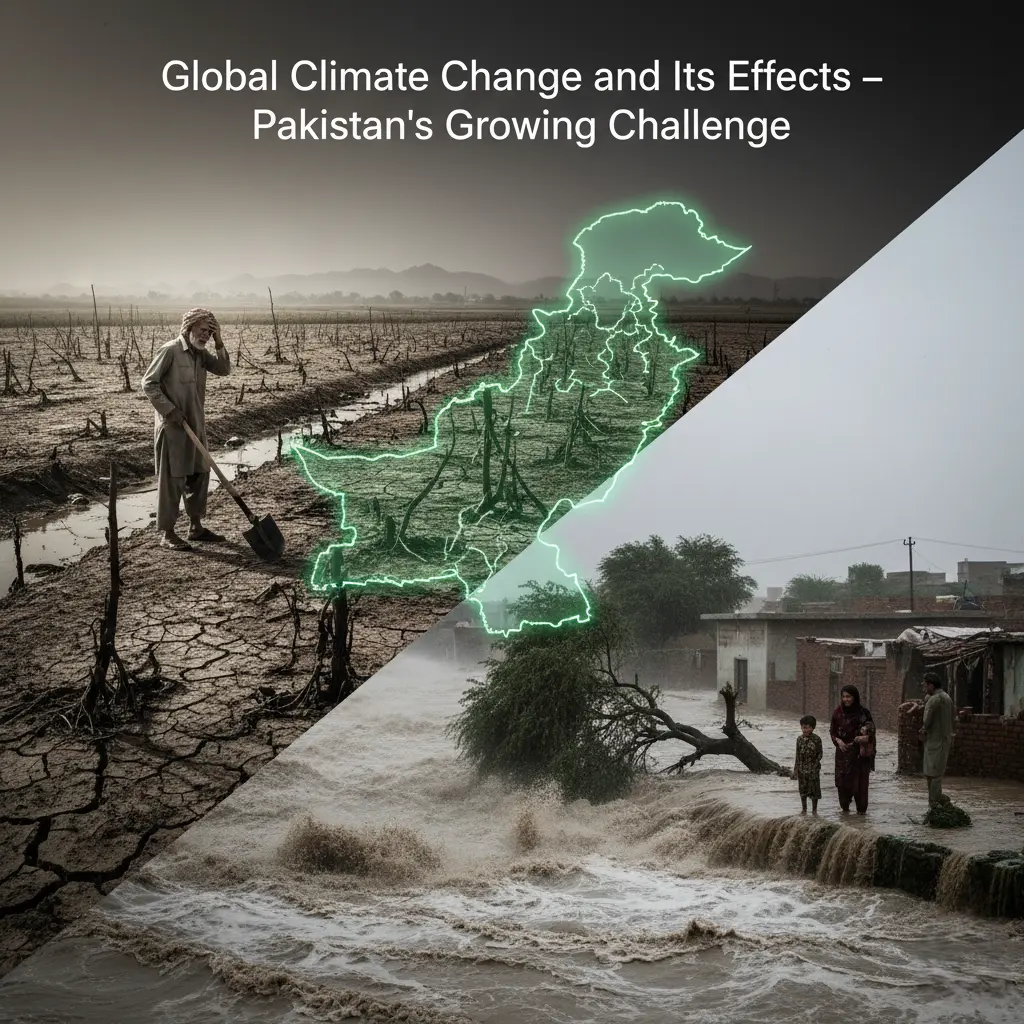
The Global Climate Risk Index says that Pakistan is now one of the ten countries most affected by climate change. Every year, there are more severe heat waves, droughts, and floods that hurt crops, the water supply, and public health. For example, the deadly floods of 2022 covered one-third of the country, forcing millions to leave their homes and showing how important it is to be ready for climate change.
Food Security and Farming at Risk
Pakistan’s farmers are becoming more and more worried as the weather changes. Wheat, rice, and cotton crops are being hurt more and more by rain that comes and goes and temperatures that are rising. Lower yields not only threaten food security, but also the jobs of millions of people who depend on farming. To stay alive, farmers must now use climate-smart farming methods, water-efficient irrigation, and seeds that can survive drought.
Green Policies and Clean Energy
Pakistan has begun to make important moves toward a more environmentally friendly future. The Ten Billion Tree Tsunami Project and solar energy projects are promising, but experts say that stronger enforcement, green financing, and global partnerships are needed. Investing in renewable energy sources like wind and hydropower could help us use less fossil fuels and create jobs that will last.
A Responsibility for Everyone
Pakistan is heavily affected by the climate change crisis, but it only adds less than 1% of the world’s greenhouse gases. This imbalance shows that rich countries have a duty to help poor countries by giving them money, sharing technology, and helping them adapt to climate change.
📢 Stay informed — see more news on todaynewspakistan.com website.